
What is Gut Bacteria (Microbiome)?
The gut microbiome refers to the community of bacteria, viruses, fungi, and other microbes living inside your digestive system, mainly in the large intestine.
These microbes are not “bad germs.” Most of them are beneficial and essential for survival.
The gut microbiome is a collection of trillions of microorganisms living in the intestines. These microbes help digest food, produce vitamins, support immunity, and regulate inflammation. A healthy gut microbiome depends on microbial diversity and balance, while an unhealthy microbiome may contribute to digestive disorders and chronic disease risk.
Gut Microbiome vs Gut Bacteria: Are They the Same?
Not exactly.
- Gut bacteria are just bacteria.
- Gut microbiome includes bacteria + fungi + viruses + other microbes.
But in everyday language, people use both terms interchangeably.
Why Gut Microbiome is Important?
The gut microbiome is not just about digestion. Research shows it affects multiple systems in the body.
1. It Supports Digestion and Nutrient Absorption
Your gut bacteria help break down complex foods, especially fiber, which your body can’t digest on its own.
They also help absorb key nutrients like:
- Vitamin B12
- Vitamin K
- Folate
- Iron (indirectly)
2. It Controls Inflammation and Immune Function
Around 70% of your immune system is linked to your gut. Gut microbes train immune cells to respond correctly.
A balanced microbiome helps prevent:
- Chronic inflammation
- Autoimmune flare-ups
- Frequent infections
An imbalanced microbiome (called dysbiosis) may increase inflammation.
3. Gut Microbiome Impacts Brain and Mood (Gut-Brain Axis)
Your gut communicates with your brain through nerves, hormones, and microbial chemicals.
Gut bacteria influence neurotransmitters like:
- serotonin (mood)
- dopamine (motivation)
- GABA (calmness)
This is why gut imbalance may be linked to anxiety, depression, and brain fog.
4. It Affects Weight, Metabolism, and Blood Sugar
Studies suggest people with higher microbial diversity often have better metabolic health.
Gut bacteria can influence:
- appetite hormones
- fat storage
- insulin sensitivity
That’s why gut microbiome and weight loss is trending in research.
Trusted Evidence Sources
You can explore research through:
- NIH (National Institutes of Health)
- PubMed
- Harvard Health
- WHO nutrition reports
(External link suggestions included later.)
Top Benefits of a Healthy Gut Microbiome
A strong gut microbiome is linked to:
- Better digestion and fewer stomach issues
- Stronger immunity
- Reduced bloating and constipation
- Healthier skin (less acne/eczema flare-ups)
- Better mood and mental clarity
- Lower inflammation markers
- Improved nutrient absorption
- Better sleep quality
- Improved metabolism and energy
How Gut Microbiome Works (Step-by-Step)
Let’s simplify what happens inside your gut.
Step 1: You Eat Food
Everything starts with your diet. Foods like fiber, vegetables, and fermented items feed beneficial bacteria.
Step 2: Gut Bacteria Break Down Fiber
Fiber reaches the large intestine undigested. Here, microbes ferment it and produce compounds called short-chain fatty acids (SCFAs).
Step 3: SCFAs Protect the Gut Lining
SCFAs like butyrate help:
- strengthen gut barrier
- reduce inflammation
- prevent “leaky gut” symptoms
Step 4: Gut Bacteria Communicate With Immune Cells
Gut microbes send chemical signals that train your immune system. This affects allergies, immunity, and inflammation levels.
Step 5: Your Body Responds
If your microbiome is healthy, your body benefits. If it’s imbalanced, you may experience digestive problems and long-term health issues.
Best Foods for Gut Bacteria (Science-Backed)
If you’re searching for the best foods for gut bacteria, focus on two categories: prebiotics and probiotics.
1. Prebiotic Foods (Fuel for Good Bacteria)
Prebiotics are fibers that feed beneficial microbes.
Best prebiotic foods include:
- garlic
- onion
- banana (slightly raw)
- oats
- apples
- flaxseeds
- chicory root
- legumes (dal, rajma, chana)
📌 Indian-friendly tip: dal + rice + salad is actually a gut-friendly meal when balanced.
2. Probiotic Foods (Good Bacteria Sources)
Probiotics are live beneficial bacteria.
Top probiotic foods:
- curd (dahi)
- buttermilk (chaas)
- fermented pickles (natural)
- kefir
- kimchi
- sauerkraut
- miso
⚠️ Avoid sugar-loaded “flavored yogurt” because it may harm gut balance.
3. High-Fiber Plant Foods (Microbiome Diversity Booster)
Gut health improves with diversity.
Eat more:
- leafy greens
- carrots
- beetroot
- papaya
- guava
- berries
- whole grains
- millets (bajra, jowar)
How to Improve Gut Microbiome Naturally (Best Practices)
If you want to know how to improve gut microbiome naturally, follow these evidence-backed steps.
1. Eat 25–35g Fiber Daily
Most people eat far less.
High-fiber choices:
- fruits + vegetables
- sprouts
- lentils
- whole grains
- seeds
2. Add Fermented Foods 3–5 Times Per Week
Start slow.
Good options:
- homemade curd
- fermented dosa/idli batter
- chaas
3. Reduce Ultra-Processed Foods
Packaged foods with preservatives, emulsifiers, and artificial sweeteners may disrupt gut bacteria.
Reduce:
- chips
- soft drinks
- instant noodles
- sugary cereal
- processed meats
4. Sleep Matters More Than You Think
Poor sleep reduces microbial diversity.
Aim for:
- 7–9 hours (US/India standard)
- consistent sleep timing
5. Exercise Improves Gut Diversity
Even moderate movement improves gut microbiota.
Best options:
- brisk walking (30 minutes)
- yoga
- strength training (2–3 days/week)
6. Drink Enough Water
Hydration supports digestion and bowel movement.
A simple rule:
- pale yellow urine = good hydration
7. Manage Stress (Gut-Brain Axis Effect)
Chronic stress changes gut bacteria.
Effective stress tools:
- meditation
- journaling
- sunlight exposure
- breathing exercises
Signs of Unhealthy Gut Bacteria
Many people search signs of unhealthy gut bacteria because symptoms can be confusing.
Common gut bacteria imbalance symptoms include:
- frequent bloating
- gas after meals
- constipation or loose stools
- acidity and reflux
- unexplained fatigue
- sugar cravings
- skin problems (acne/eczema)
- frequent infections
- brain fog
- mood swings
When to See a Doctor
If symptoms last more than 2–3 weeks or include:
- blood in stool
- sudden weight loss
- severe pain
- fever
don’t self-diagnose. Get medical evaluation.
How to Restore Gut Flora After Antibiotics
Antibiotics can save lives, but they may reduce good bacteria too.
If you’re wondering how to restore gut flora after antibiotics, do this:
Best Recovery Plan
- Eat fermented foods daily (curd, kefir, fermented vegetables)
- Increase fiber intake gradually
- Consider probiotics only if recommended
- Avoid alcohol for 2–3 weeks
- Reduce sugar and junk food
- Focus on sleep and hydration
📌 Most microbiomes recover in weeks, but some people take longer depending on diet and health.
Probiotics: Are They Necessary?
Many people search best probiotics for gut health, but here’s the honest truth:
Probiotics are helpful, but not magic.
Probiotic supplements may help in:
- antibiotic-associated diarrhea
- IBS (some cases)
- travel-related gut issues
But long-term gut health depends more on:
- fiber intake
- food diversity
- lifestyle consistency
If you take probiotics but still eat junk food daily, results will be weak.
Common Mistakes People Make (That Damage Gut Health)
Here are the most common mistakes beginners make:
- Taking probiotics without fixing diet
- Eating too little fiber
- Overusing antibiotics unnecessarily
- Eating too much sugar
- Avoiding fats completely (healthy fats support gut lining)
- Drinking alcohol regularly
- Ignoring stress and poor sleep
- Doing extreme detox diets
- Overusing laxatives
- Expecting gut healing in 3 days
Gut health takes consistency, not shortcuts.
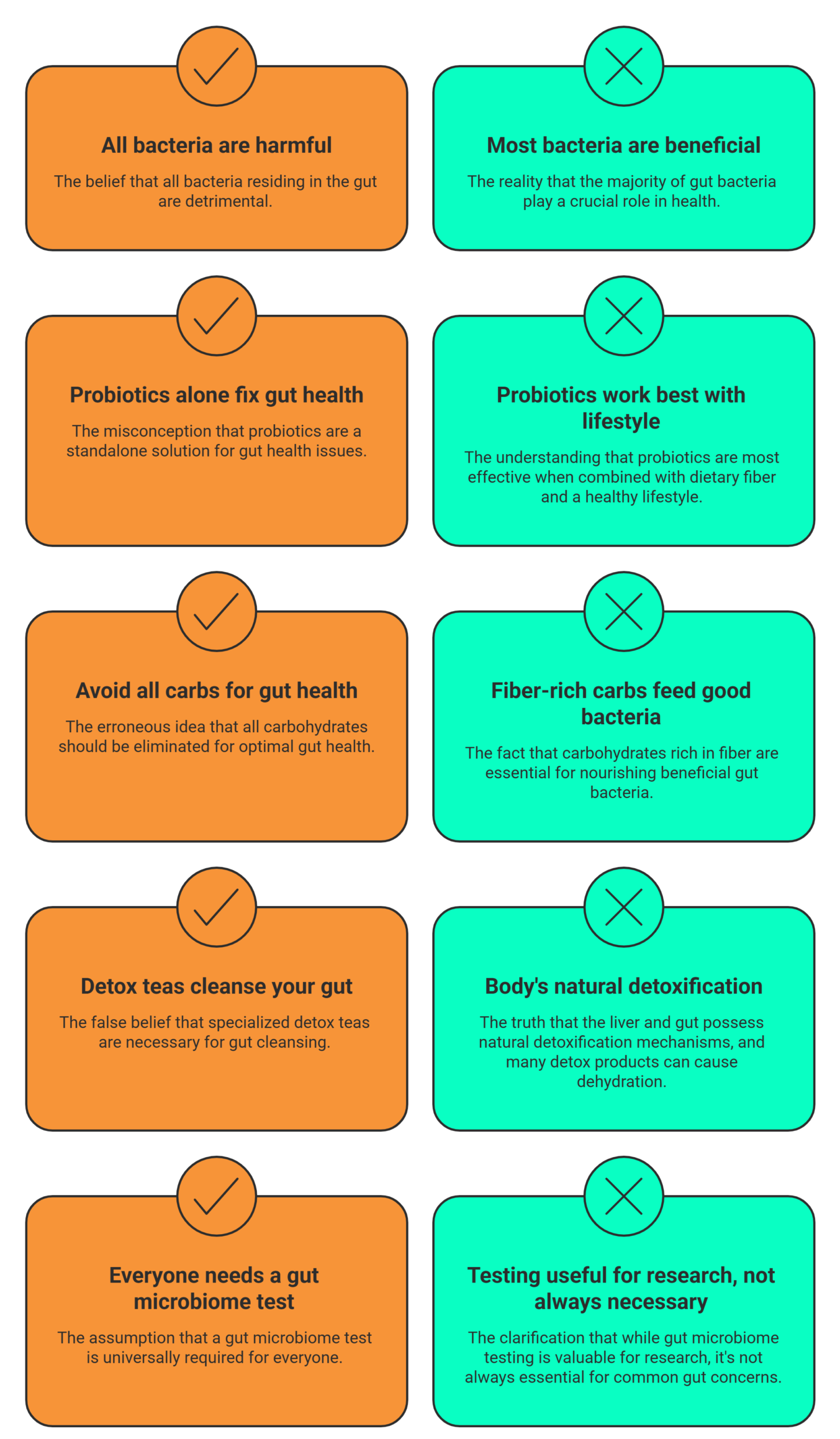
Myths vs Facts (Gut Microbiome)
FAQs (People Also Ask Questions)
1. What is the gut microbiome in simple terms?
The gut microbiome is a community of trillions of microbes in your intestines that help digestion, immunity, and overall health.
2. How do I know if my gut bacteria is unhealthy?
Signs include bloating, constipation, diarrhea, fatigue, sugar cravings, skin issues, and frequent infections.
3. What foods improve gut bacteria?
High-fiber foods (fruits, vegetables, legumes) and fermented foods (curd, kefir, kimchi) improve gut bacteria.
4. How long does it take to heal the gut microbiome?
It may improve within a few weeks, but full healing can take months depending on diet, lifestyle, and gut damage.
5. Are probiotics really necessary for gut health?
Not always. Many people can improve gut health naturally through fiber-rich foods, fermented foods, and lifestyle changes.