A high protein vegetarian diet plan for Indians is one of the smartest ways to lose fat, build muscle, and improve energy—without eating meat or fish. The problem is most Indian vegetarian diets are heavy on roti, rice, and potatoes, which gives calories but not enough protein.
If you are a beginner, gym-goer, or simply trying to eat healthier, this guide will give you a complete meal plan, protein food list, common mistakes, and a practical 7-day chart.
What is a High Protein Vegetarian Diet Plan for Indians?
A high protein vegetarian diet plan for Indians is a meal structure that focuses on increasing protein intake using vegetarian Indian foods like dals, paneer, milk, curd, tofu, soy chunks, sprouts, and legumes.
Featured Snippet Definition
A high protein vegetarian diet plan for Indians is a diet approach where daily meals are designed to provide higher protein using vegetarian Indian foods like dal, paneer, curd, soy, tofu, legumes, and nuts. It supports muscle recovery, fat loss, stable blood sugar, and better overall health.
Why High Protein Vegetarian Diet Plan is Important (Science-Based)
Protein is not only for bodybuilders. It is essential for:
- muscle repair
- immunity
- hormone production
- healthy skin and hair
- metabolism support
Evidence-Based Reasoning
Studies show that higher protein diets help improve satiety (feeling full), reduce cravings, and support lean muscle mass during fat loss. Also, Indian diets are often protein-deficient because they rely too much on carbohydrates.
Most adults need around 0.8g protein per kg body weight, but active people and gym beginners often benefit from 1.2–2.0g/kg, depending on goal.
For example:
- 60 kg person → 72g to 120g protein/day
- 75 kg person → 90g to 150g protein/day
If you don’t eat enough protein, you may feel tired, weak, hungry frequently, and lose muscle instead of fat.
Trusted sources: WHO and NIH emphasize protein’s role in tissue maintenance and metabolic health.
Top Benefits of High Protein Vegetarian Diet Plan for Indians
Helps in Weight Loss (Fat Loss)
Protein reduces hunger hormones and keeps you full longer.
Supports Muscle Gain & Toning
If you are training in gym, protein is necessary for muscle repair and growth.
Improves Energy Levels
Balanced protein + fiber meals prevent sugar crashes.
Better Hair, Skin, and Nails
Protein provides amino acids needed for collagen and keratin.
Controls Blood Sugar
High-protein meals reduce insulin spikes, especially when paired with fiber.
Boosts Metabolism
Muscle burns more calories than fat, and protein helps preserve muscle.
How It Works (Step-by-Step)
A high protein Indian vegetarian meal plan works by replacing low-protein calories with protein-rich options.
Step 1: Set Your Daily Protein Target
A beginner-friendly target:
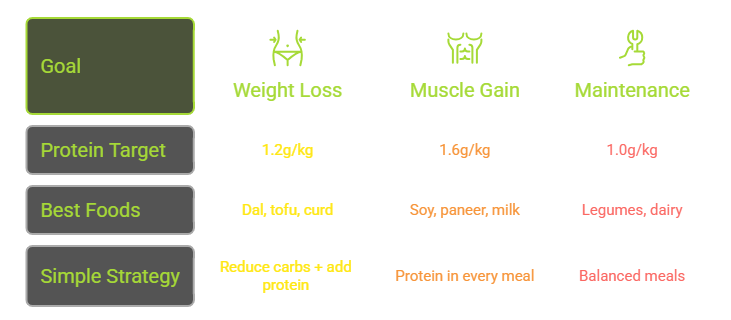
- Weight loss: 1.2g/kg
- Muscle gain: 1.6g/kg
- Maintenance: 1.0g/kg
Example:
If you weigh 70 kg and want fat loss: 70 × 1.2 = 84g protein/day
Step 2: Distribute Protein Across Meals
Instead of eating dal only at lunch, spread protein through the day.
A smart distribution:
- Breakfast: 20–25g
- Lunch: 25–30g
- Snack: 10–20g
- Dinner: 25–30g
Step 3: Combine Protein Sources
Vegetarian proteins are sometimes incomplete (missing certain amino acids). Combining foods solves this.
Best combos:
- dal + rice
- rajma + rice
- roti + chana
- curd + sprouts
- paneer + vegetables
Step 4: Prioritize High-Protein Foods Daily
Your daily diet should include at least 2–3 of these:
- paneer/tofu
- dal/legumes
- milk/curd
- soy chunks
- sprouts
- whey (optional)
Best High Protein Vegetarian Foods for Indians (List Snippet)
Here are the best high protein vegetarian foods for Indians:
- Soy chunks (soya)
- Paneer
- Tofu
- Moong dal
- Masoor dal
- Chana (chickpeas)
- Rajma (kidney beans)
- Greek yogurt / hung curd
- Milk
- Peanuts and peanut butter
Protein Content of Common Indian Vegetarian Foods
| Food (Approx Portion) | Protein (Approx) |
|---|---|
| Soy chunks (50g dry) | 25g |
| Paneer (100g) | 18–20g |
| Tofu (100g) | 10–12g |
| Moong dal cooked (1 bowl) | 14g |
| Rajma cooked (1 bowl) | 15g |
| Chana cooked (1 bowl) | 14–15g |
| Milk (250ml) | 8g |
| Curd (200g) | 8–10g |
| 2 boiled eggs (if eggetarian) | 12g |
| Peanut butter (2 tbsp) | 8g |
(Values vary by brand and cooking method.)
7-Day High Protein Vegetarian Diet Plan for Indians (Beginner Friendly)
This is a realistic 7 day high protein vegetarian diet plan India that works for most people.
Day 1
Breakfast: Moong dal chilla (2) + curd
Lunch: 2 roti + rajma + salad
Snack: Roasted chana + buttermilk
Dinner: Paneer bhurji + stir-fry veggies
Day 2
Breakfast: Oats + milk + peanut butter
Lunch: Dal + brown rice + cucumber salad
Snack: Sprouts chaat + lemon water
Dinner: Tofu curry + 2 roti
Day 3
Breakfast: Besan cheela + mint chutney
Lunch: Chole + 2 roti + salad
Snack: Greek yogurt / hung curd + nuts
Dinner: Soya chunk pulao + raita
Day 4
Breakfast: Poha + sprouts topping + curd
Lunch: Mixed dal + 2 roti + veggies
Snack: Protein smoothie (milk + banana + peanut butter)
Dinner: Paneer tikka + salad bowl
Day 5
Breakfast: Upma + tofu cubes + curd
Lunch: Rajma chawal (controlled rice portion)
Snack: Makhana + milk
Dinner: Moong dal khichdi + curd
Day 6
Breakfast: Dalia + milk + almonds
Lunch: Soya chunk curry + 2 roti
Snack: Fruit + roasted peanuts
Dinner: Palak paneer + salad
Day 7
Breakfast: Protein-rich veg breakfast Indian: Paneer sandwich on whole wheat bread
Lunch: Chana salad bowl + buttermilk
Snack: Sprouts + coconut water
Dinner: Dal tadka + tofu stir fry + 1 roti
High Protein Veg Breakfast Indian Options (Quick Ideas)
If you struggle with protein in mornings, you’re not alone. Most Indians eat low-protein breakfasts like paratha, poha, or bread-butter.
Best High Protein Vegetarian Breakfast Ideas:
- Moong dal chilla + curd
- Besan cheela + paneer stuffing
- Oats + milk + nuts + seeds
- Paneer sandwich + milk
- Sprouts chaat + curd
- Tofu bhurji + roti
- Greek yogurt bowl + fruits
Goal: Minimum 20g protein in breakfast.
How to Make Your Indian Lunch & Dinner High Protein
A common mistake is eating roti + sabzi only. That is not enough protein.
High Protein Indian Veg Lunch and Dinner Rule:
Every meal must have:
- 1 protein source
- 1 fiber source
- 1 controlled carb source
Best Lunch Protein Add-ons:
- 1 bowl dal
- 1 bowl rajma/chole
- 100g paneer/tofu
- soy chunks curry
Best Dinner Protein Add-ons:
- paneer bhurji
- tofu stir fry
- mixed dal soup
- soy chunks masala
Best Practices / Tips for a High Protein Vegetarian Diet Plan for Beginners
1. Use Soy Chunks Smartly (Cheap + Powerful)
Soy chunks are one of the cheapest high-protein foods in India.
Tip: boil them and squeeze water before cooking.
2. Eat Protein in Every Meal
Don’t keep protein only for lunch.
3. Add Curd or Milk Daily
Curd improves digestion and adds easy protein.
4. Choose Dal + Paneer Combination
Dal alone is good, but dal + paneer makes protein intake much easier.
5. Increase Protein Gradually
If you suddenly jump from 40g to 120g protein, you may face bloating.
Increase slowly over 2–3 weeks.
6. Drink Enough Water
Higher protein diets need proper hydration.
7. Add Strength Training for Best Results
Even basic home workouts + high protein diet gives visible body toning.
Common Mistakes People Make
Mistake 1:
Eating Only Dal and Thinking It’s Enough – Dal is healthy but alone won’t hit your protein target.
Mistake 2:
Too Much Paneer (Excess Fat) – Paneer is great, but overeating increases calories fast.
Mistake 3:
Ignoring Fiber – High protein diet without fiber leads to constipation. Add salad, vegetables, fruits.
Mistake 4:
Eating Too Many “Protein Snacks” Protein bars and packaged foods are often full of sugar.
Mistake 5:
Skipping Meals – Skipping meals causes overeating later and reduces muscle recovery.
Myths vs Facts (Reality Check)
Myth 1: Vegetarians Can’t Build Muscle
Fact: You can build muscle with vegetarian protein sources like soy, paneer, tofu, dals, and supplements.
Myth 2: Paneer is Unhealthy
Fact: Paneer is healthy in controlled portions. The problem is excess.
Myth 3: Dal Has Enough Protein
Fact: Dal is good but not enough alone to hit 80–120g protein daily.
Myth 4: Protein Powder is Mandatory
Fact: Not mandatory, but helpful for busy people.
Myth 5: High Protein Damages Kidneys
Fact: In healthy individuals, high protein diets are generally safe. People with kidney disease must consult a doctor.
FAQs (People Also Ask Questions)
1. How can vegetarians get 100g protein a day in India?
By combining soy chunks, paneer/tofu, dal, curd, milk, sprouts, and nuts. A simple plan is paneer breakfast, dal lunch, soy snack, tofu dinner.
2. Which Indian vegetarian food is highest in protein?
Soy chunks are among the highest protein vegetarian foods available in India.
3. Is paneer good for high protein diet?
Yes. Paneer is a high-protein food and supports muscle building. Use moderate portions (80–120g/day).
4. What is the best high protein veg breakfast in India?
Moong dal chilla + curd, besan cheela + paneer, or oats with milk and peanut butter are top options.
5. Can I build muscle on a vegetarian diet in India?
Yes. With consistent strength training and 1.6g/kg protein intake, muscle building is possible even on a vegetarian diet.
Quick Summary Table (Practical Diet Guide)