
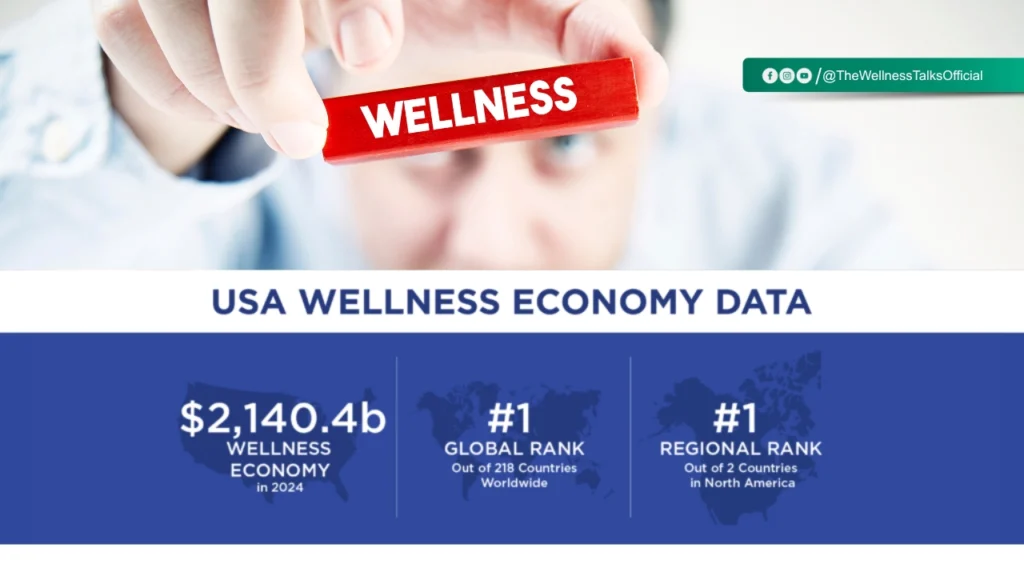
The US wellness economy reached $2.1 trillion in 2024 data, according to new figures the Global Wellness Institute (GWI) released in 2026. That makes the United States the largest wellness market in the world by a wide margin, covering everything from fitness and spas to mental health care and longevity medicine. GWI’s research also shows the average American now spends more than $6,000 a year on wellness, and the sector accounts for over 7% of total US economic output.
What Did the New Wellness Economy Report Find?
GWI released its updated US figures in partnership with longevity company Fountain Life. According to the report, the US wellness economy grew at an average annual rate of 7.9% between 2019 and 2024.
That pace puts the US among the ten fastest-growing wellness markets in the world, even though it’s already by far the largest. The country also holds the biggest market share in nine of the eleven wellness sectors GWI tracks globally, spanning categories from physical activity and healthy eating to spas and wellness real estate.
A separate, related GWI release – its 2026 country rankings report covering 145 nations – adds global context to these US numbers. Together, the two reports show not just how large the American wellness market is, but how it stacks up against the rest of the world, covered later in this article.
How Big Is the US Wellness Market, by the Numbers?
GWI’s data points to a market that is both massive and still expanding quickly. Key figures from the report include:
- $2.1 trillion – total value of the US wellness economy as of 2024
- 7.9% – average annual growth rate of the US wellness economy, 2019–2024
- $6,293 – average per-person spending on wellness in 2024, the first time it topped $6,000
- 7.33% – share of total US GDP represented by the wellness economy
- 9 of 11 – wellness sectors in which the US holds the largest market share globally
- 30,000+ – spas operating across the US, plus nearly 400 thermal or mineral springs
According to GWI chair and CEO Susie Ellis, the scale of personal spending shows that “the US wellness market is deep, dynamic, and innovative.” She tied this level of investment to a broader shift toward people taking a more active, preventive role in their own health.
Which Wellness Sectors Are Growing the Fastest?
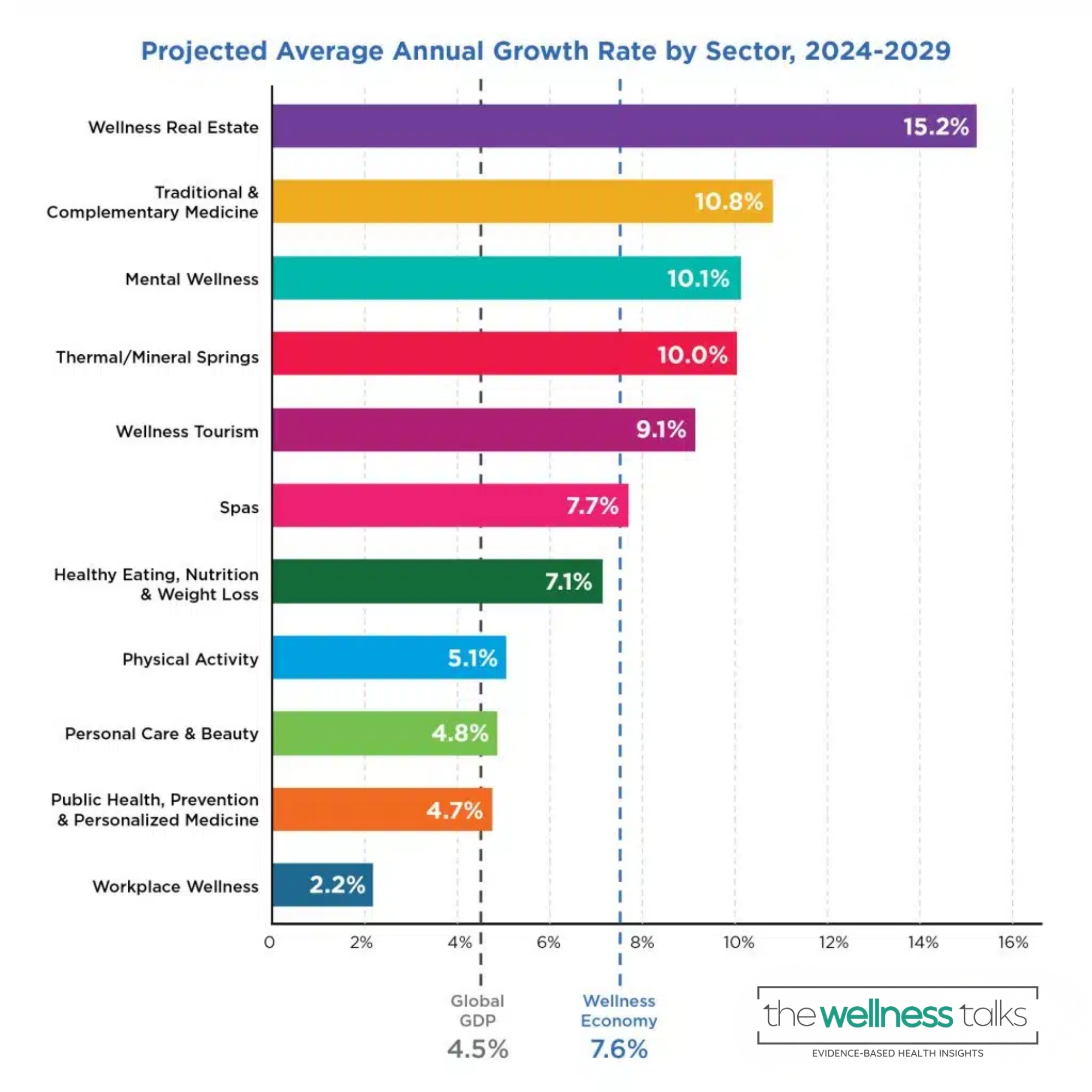
Not every part of the wellness economy is expanding at the same speed. GWI’s data shows a handful of sectors pulling ahead of the rest between 2019 and 2024:
- Wellness real estate – 18.8% average annual growth
- Mental wellness – 14.2% average annual growth
- Thermal and mineral springs – 10.2% average annual growth
- Traditional and complementary medicine – 10.0% average annual growth
- Public health, prevention, and personalized medicine – grew 8.8% a year to reach $240 billion in 2024
The rise of wellness real estate stands out in particular. GWI notes that a growing number of Americans now live or work in communities and buildings specifically designed around health and wellbeing, rather than retrofitting wellness features into existing spaces after the fact.
How Does the US Compare to the Rest of the World?
The US isn’t just leading by a small margin. Per Happi’s coverage of GWI’s separate 2026 country rankings report, which measures wellness markets across 145 countries, the US accounts for close to one-third – 32% – of the entire global wellness economy.
GWI’s data lists the five largest national wellness markets as:
- United States – $2.1 trillion
- China – $950 billion
- Germany – $281 billion
- Japan – $262 billion
- United Kingdom – $261 billion
Together, these five countries make up 58% of the worldwide wellness economy, Happi reports. It’s worth noting that this country-level breakdown comes from a separate GWI release focused on global rankings, published earlier in 2026, rather than the US-specific report developed with Fountain Life – though both point to the same $2.1 trillion US figure.
Why Is the Middle East Wellness Market Growing So Fast?
While the US remains the largest wellness market, it isn’t the fastest-growing one. According to GWI’s country rankings data, the United Arab Emirates (14.3% annual growth) and Saudi Arabia (12.2% annual growth) have expanded faster than any other wellness market in the world since 2019.
Katherine Johnston, a GWI senior research fellow, attributed much of that surge to “an explosive wellness market in the UAE and Saudi Arabia.” Rising wellness tourism, plus increased spending from consumers, businesses, and governments alike, is fueling growth across categories like wellness real estate, public health, and healthy eating across the region.
The beauty sector is following a similar trajectory. Happi notes that retailer Ulta has continued expanding into the Middle East, and the Beautyworld Middle East 2025 trade event in Dubai drew more than 2,500 exhibitors from 68 countries – a sign of how quickly the regional wellness and beauty market is scaling up.
Beyond the Middle East, GWI also names India, Mexico, Poland, the UK, the Netherlands, Canada, the US, and Australia as standout five-year growth leaders among the world’s largest wellness markets. Among smaller markets, Croatia, Cuba, Romania, Costa Rica, and Kazakhstan are singled out as fast movers.
Why Does This Growth Matter?
A $2.1 trillion wellness economy touches a wide range of everyday spending decisions, from gym memberships and therapy sessions to spa visits and wellness-oriented housing. Fountain Life co-founder and CEO Dr. Bill Kapp framed the shift as a move away from reactive health care and toward continuous, preventive engagement with personal health.
For policymakers and businesses, GWI’s data offers a clearer picture of where consumer dollars are flowing and which sectors – like mental wellness and longevity-focused medicine – are scaling the fastest. For everyday readers, the numbers mostly confirm a trend many have already noticed firsthand: wellness spending, in its many forms, keeps claiming a bigger share of household budgets.
GWI also points to a broader cultural shift behind the spending. The institute highlights how US parks, public trails, and recreation areas, along with a growing wave of hotels built around sleep, nutrition, and social connection, give Americans more everyday access to wellness-oriented spaces than in years past. National observances such as Global Wellness Day, marked the first Saturday in June, and World Wellness Weekend in September are part of that same push to make wellness activities more accessible and visible nationwide.
Key Takeaways
- The US wellness economy reached $2.1 trillion in 2024 data, released by GWI in 2026 – the largest national wellness market in the world.
- The US represents about 32% of the entire global wellness economy, according to GWI’s separate country rankings report.
- Average per-person wellness spending in the US hit $6,293 in 2024, the first time it crossed the $6,000 mark.
- Wellness real estate (18.8%) and mental wellness (14.2%) were the fastest-growing US wellness sectors between 2019 and 2024.
- The UAE and Saudi Arabia are currently the fastest-growing wellness markets in the world, outpacing the US in growth rate, though not in size.
Frequently Asked Questions
How big is the US wellness economy in 2026?
New data released in 2026 puts the US wellness economy at $2.1 trillion, based on 2024 figures from the Global Wellness Institute. That makes the US the largest wellness market in the world, far ahead of China, the next-largest market at roughly $950 billion.
What percentage of the global wellness market does the US control?
According to GWI’s 2026 country rankings report, the US makes up close to 32% of the entire global wellness economy, which spans 145 countries tracked by the organization. No other single country comes close to that share of the market.
How much do Americans spend on wellness each year?
GWI data shows average per-person wellness spending in the US reached $6,293 in 2024, the first year that figure topped $6,000. This spending covers categories like fitness, healthy eating, mental wellness, spas, beauty, and personalized medicine, and now equals about 7.33% of total US GDP.
Which wellness sectors are growing fastest in the US?
Between 2019 and 2024, wellness real estate grew fastest at 18.8% a year, followed by mental wellness at 14.2%, thermal and mineral springs at 10.2%, and traditional and complementary medicine at 10.0%, according to GWI’s most recent data on the US wellness economy.
What are the five largest wellness economies in the world?
GWI ranks the US ($2.1 trillion), China ($950 billion), Germany ($281 billion), Japan ($262 billion), and the UK ($261 billion) as the five largest national wellness markets. Together, these five countries represent 58% of the entire global wellness economy, according to GWI’s 2026 country rankings report.
Why are the UAE and Saudi Arabia’s wellness markets growing so quickly?
GWI reports the UAE (14.3% annual growth) and Saudi Arabia (12.2%) have grown faster than any other wellness market in the world since 2019. Growth is driven by rising wellness tourism, plus increased spending from consumers, businesses, and governments across the broader Middle East region.
Conclusion
The latest Global Wellness Institute data confirms what many in the industry have suspected for years: the US wellness economy isn’t just large, it’s still accelerating, now worth $2.1 trillion and growing faster than the broader US economy. At the same time, GWI’s global rankings show countries like the UAE and Saudi Arabia closing the growth gap, even as the US keeps its commanding lead in total size. For now, the numbers point to wellness spending – on everything from mental health support to longevity care – becoming a bigger, more permanent line item in how people budget their money.
References
- Global Wellness Institute. ” US Wellness Economy Surges to $2.1 Trillion, Cementing Global Leadership. “
- PR Newswire / Global Wellness Institute. ” US Wellness Economy Surges to $2.1 Trillion, Cementing Global Leadership. “
- happi.com, Christine Esposito. ” US Dominates Global Wellness Market.” Happi, February 2, 2026.